Systems built
to be kept
ION RENOV & PAINT designs, builds, integrates, and maintains software and infrastructure for organisations whose daily operations depend on it. The emphasis is durability: systems that stay legible, secure, and changeable years after release.

An engineering practice, not a product catalogue
ION RENOV & PAINT works on the unglamorous middle of software: the internal tools, integrations, data flows, and infrastructure that rarely appear in a company brochure but decide whether a working day runs smoothly. Each engagement starts from the organisation's actual constraints rather than from a predefined methodology.
The working style is deliberate and documented. Decisions are written down, trade-offs are made explicit, and the reasoning behind an architecture is handed over with the code. That is what allows a system to survive staff changes, vendor changes, and shifting requirements without a rewrite.
What the practice covers
Eight areas of work that combine into full delivery or stand alone as focused engagements.
Custom software development
Applications shaped around a specific operating model rather than adapted from generic tooling.
Web application development
Browser-based systems with attention to accessibility, performance, and predictable behaviour under load.
IT consulting
Independent assessment of architecture, tooling, and delivery practice, delivered as written findings.
Cloud and infrastructure
Environment design, provisioning as code, deployment pipelines, observability, and cost visibility.
System integration
Contracts and data flows between applications, services, and third-party platforms.
Software modernisation
Incremental restructuring of software that has become slow or risky to change.
Quality assurance
Automated and exploratory testing designed around the risks that matter to the business.
Maintenance and support
Monitoring, dependency hygiene, incident response, and steady improvement after release.
Where software
starts to hurt
Most engagements begin with a symptom rather than a specification. These are the recurring shapes of that symptom.
Manual work between systems
Data is re-keyed by hand because two applications never agreed on a format.
Changes take too long
A small feature request turns into weeks of cautious work across tangled code.
Unclear ownership
Nobody can say with confidence how a critical process actually runs end to end.
Fragile releases
Deployments are rare, manual, and treated as events to be survived.
Unmanaged risk
Dependencies, credentials, and access rules drift without review.
Growth pressure
A system built for one scale is being asked to operate at another.
Technology ground covered
Capability areas rather than a fixed toolchain. Specific technologies are selected per engagement and documented with the reasoning behind the choice.
- Application engineering
- Backend services, APIs, browser interfaces, background processing, and scheduled workloads.
- Data and storage
- Relational schema design, migrations, reporting pipelines, caching, and archival strategy.
- Cloud operations
- Infrastructure as code, containerised workloads, environment parity, and rollback paths.
- Interfaces and contracts
- REST and event-driven interfaces, message queues, webhooks, and versioning discipline.
- Observability
- Structured logging, metrics, tracing, and alerting tied to conditions a team can act on.
- Delivery automation
- Build pipelines, automated checks, review workflow, and repeatable release procedures.
From first message to handover

- 01
Written brief
The situation is described in writing: what exists today, what is failing, and what would count as an improvement.
- 02
Discovery
Existing code, data, infrastructure, and constraints are reviewed. Assumptions are separated from facts.
- 03
Scoping
A first stage is defined with a clear boundary, so value is delivered before large commitments are made.
- 04
Architecture
Structure, interfaces, and failure modes are decided and recorded as short decision records.
- 05
Implementation
Work proceeds in reviewable increments with automated checks running from the first commit.
- 06
Verification
Functional, integration, and non-functional checks are run against agreed acceptance conditions.
- 07
Release
Deployment is automated and reversible, with monitoring in place before traffic arrives.
- 08
Handover and care
Documentation, runbooks, and access are transferred; ongoing maintenance continues if wanted.
Who this work tends to suit
Described by working situation rather than by named clients or sector claims.
Operations-heavy teams
Organisations where a scheduling, tracking, or dispatch process runs the business day.
Small technical teams
In-house developers who need additional capacity or a second opinion on architecture.
Service organisations
Groups whose delivery depends on coordinating people, jobs, and records across tools.
Long-lived systems
Owners of software that has been running for years and now needs careful renewal.
These descriptions indicate the kinds of situations the practice is set up for. They are not a claim about specific engagements, industries, or organisations.
Security,
reliability,
maintainability
Security
- Least-privilege access by default
- Secrets held outside source control
- Encrypted transport and storage
- Dependency review as routine work
- Auditable records of change
Reliability
- Failure modes designed, not discovered
- Reversible, automated deployment
- Backups verified by restoring them
- Alerting tied to actionable conditions
- Graceful degradation where possible
Maintainability
- Small, reviewable changes
- Tests that describe intent
- Written architecture decisions
- Consistent structure across modules
- Documentation kept beside the code
What the practice commits to
Commitments about conduct and method — not predictions about outcomes.
Written reasoning
Every significant decision arrives with the alternatives that were considered and why they were set aside.
No lock-in by design
Infrastructure, repositories, and credentials belong to the organisation and are transferable at any point.
Scope discipline
Work is bounded in stages, so direction can change without discarding what has already been built.
Plain language
Technical status is reported in terms an owner or manager can act on, not in framework vocabulary.
Care after release
A release is a milestone rather than an ending; maintenance is planned rather than improvised.
Honest constraints
Where something is uncertain, risky, or outside the practice's competence, that is stated directly.
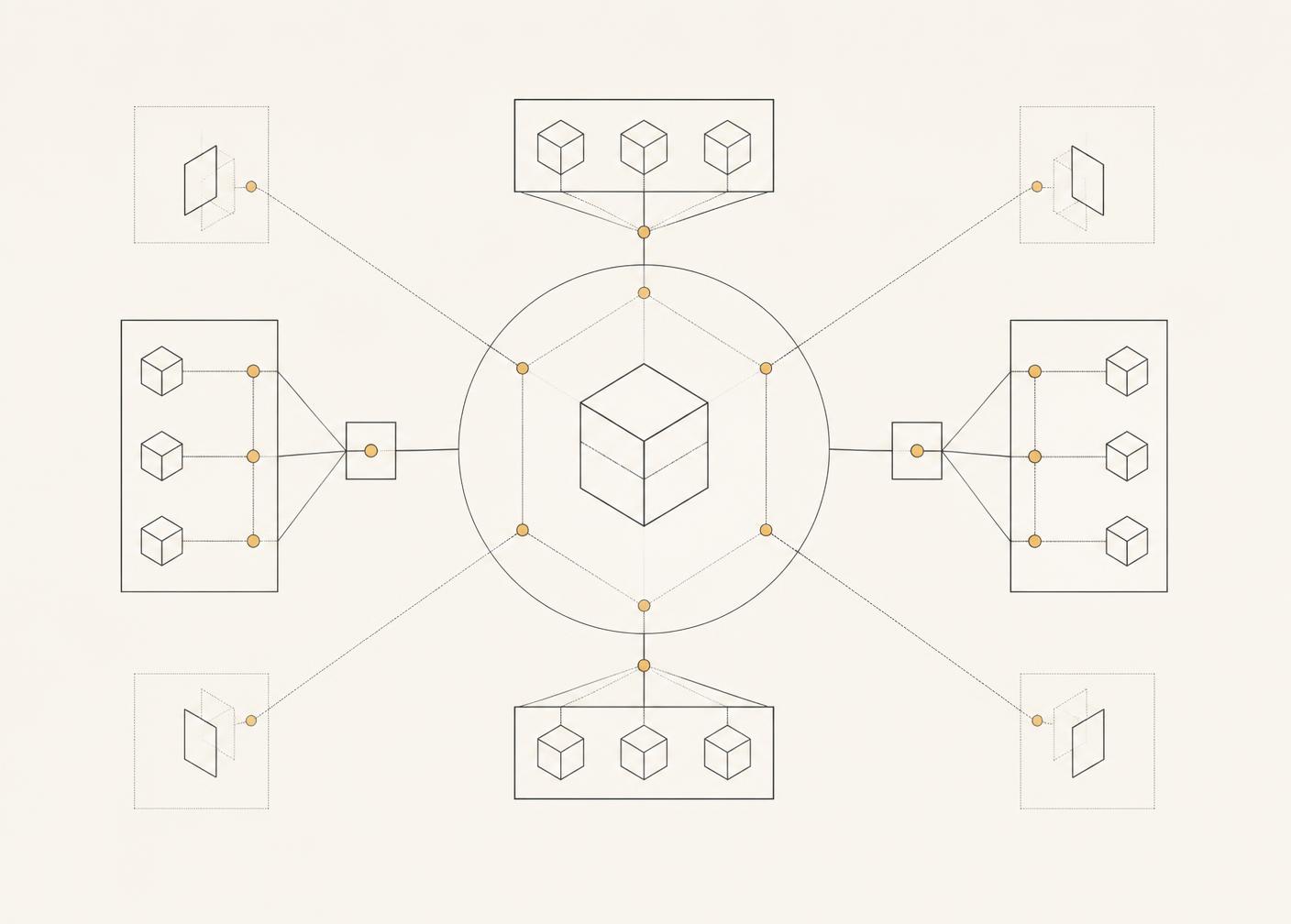
One diagram everyone in the room can read
Before code is written, a system is drawn: services, boundaries, data ownership, and the routes a request can take when something fails. The diagram is kept current for the life of the system so that onboarding, incident response, and planning all start from the same picture.
- Boundaries
- Explicit ownership of data and behaviour
- Contracts
- Versioned interfaces between components
- Failure paths
- Documented behaviour when a link breaks
- Recovery
- Tested procedures for restoring service
Frequently asked questions
- What kind of work does ION RENOV & PAINT take on?
- Work generally falls into four groups: building new software, integrating systems that were never designed to talk to each other, modernising software that has become difficult to change, and maintaining systems already in production.
- How does an engagement usually begin?
- It begins with a written description of the situation. From there the scope is discussed, constraints are written down, and a small, clearly bounded first stage is agreed before any larger commitment is made.
- Do you work with existing internal teams?
- Yes. Work can be organised alongside an internal team, with shared repositories, shared review practices, and documentation that stays readable after the engagement ends.
- Which technologies are used?
- Technology choices follow the problem rather than preference. Where an organisation already has an established stack, that stack is respected unless there is a documented reason to change it.
- How is security handled?
- Security is treated as part of delivery rather than a final review step: least-privilege access, dependency review, encrypted transport and storage, and audit trails are designed in from the start.
- What happens after a system goes live?
- Maintenance covers monitoring, dependency updates, incident response, and incremental improvement. The intention is that a system remains understandable and changeable long after its first release.
Get in touch in writing
A short written description of the situation is enough to begin. It is read and answered by email.
Company
ION RENOV & PAINT
triciaporter81@gmail.com